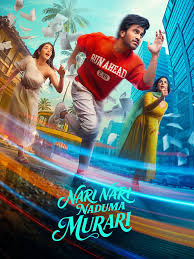
Nari Nari Naduma Murari Movie Review: A Classic Telugu Entertainer Built on Identity, Humor, and Values
Released in 1990, Nari Nari Naduma Murari is a Telugu-language romantic comedy drama directed by A. Kodandarami Reddy and starring Nandamuri Balakrishna in a dual role. Blending mistaken identity with romance, moral introspection, and situational humor, the film emerged as a standout family entertainer of its era and continues to enjoy enduring popularity.
With strong performances from Shobana and Nirosha, melodious music by K. V. Mahadevan, and a screenplay that balances comedy with emotional restraint, Nari Nari Naduma Murari remains a defining example of early 1990s mainstream Telugu cinema.
Movie Details
| Category | Information |
|---|---|
| Title | Nari Nari Naduma Murari |
| Release Year | 1990 |
| Language | Telugu |
| Genre | Romantic Comedy, Drama |
| Director | A. Kodandarami Reddy |
| Producer | K. Murari |
| Lead Actor | Nandamuri Balakrishna (Dual Role) |
| Female Leads | Shobana, Nirosha |
| Music Director | K. V. Mahadevan |
| Runtime | Approximately 150 minutes |
Plot Synopsis
The narrative centers on Murari, a soft-spoken, morally upright man raised with traditional values that emphasize emotional restraint, personal dignity, and respect toward women. He leads a modest life shaped by cultural discipline and ethical clarity.
Murari’s life takes an unexpected turn when he meets Shobana’s character, a modern, self-assured woman whose outlook on relationships and independence contrasts sharply with his own. Their growing relationship becomes complicated by the sudden appearance of Murari’s exact lookalike—a flamboyant, carefree city dweller with a casual attitude toward romance.
This second Murari becomes romantically involved with Nirosha’s character, triggering a series of misunderstandings fueled by mistaken identity. As both men unknowingly step into each other’s emotional spaces, confusion escalates, testing trust, love, and accountability.
The film gradually untangles these conflicts, leading to revelations that reinforce sincerity, moral responsibility, and emotional maturity as the foundation of lasting relationships.
Core Themes and Interpretation
Identity and Character
The film’s central idea is that true identity is defined by behavior and values, not physical appearance. While the dual-role structure provides humor, it also serves as a moral contrast between discipline and indulgence.
Tradition and Modernity
Nari Nari Naduma Murari reflects a transitional cultural moment, portraying the coexistence—and occasional clash—between traditional values and modern lifestyles. Rather than condemning change, the film advocates balance and understanding.
Emotional Responsibility
The protagonist’s respect for emotional boundaries is portrayed as strength, not weakness. The narrative reinforces accountability in love, positioning emotional honesty as essential to meaningful relationships.
Performances
Nandamuri Balakrishna
Balakrishna delivers one of his most subtle and accessible performances, skillfully differentiating the two Muraris through body language, vocal tone, and emotional expression. His restrained approach adds credibility to both roles and elevates the film beyond conventional comedy.
Shobana
Shobana brings poise and intelligence to her role, portraying a modern woman with emotional depth and agency. Her performance avoids caricature, making the romantic conflict feel grounded and relatable.
Nirosha
Nirosha contributes charm and energy, particularly in comedic sequences driven by confusion. Her expressive performance complements the film’s lighter moments without undermining emotional sincerity.
Direction and Screenplay
Director A. Kodandarami Reddy demonstrates a firm grasp of tone and pacing, ensuring the film remains engaging without slipping into excess. The screenplay relies on coincidence and repetition, but these devices are handled with clarity and restraint.
Humor emerges naturally from character behavior rather than exaggerated slapstick, allowing the film to age more gracefully than many of its contemporaries.
Music and Technical Craft
Music and Background Score
The soundtrack by K. V. Mahadevan is melodic and emotionally aligned with the narrative. Songs are integrated seamlessly, enhancing character development rather than interrupting it.
Cinematography
The visual treatment subtly distinguishes rural simplicity from urban flamboyance, reinforcing thematic contrasts without drawing attention away from the story.
Editing
Clean editing maintains narrative coherence, especially during scenes involving mistaken identity and parallel storylines.
Strengths and Weaknesses
Strengths
-
Distinct and effective dual-role performance
-
Strong emotional core supported by moral clarity
-
Well-written female characters
-
High rewatch value as a family entertainer
Weaknesses
-
Predictable resolution
-
Certain comedic elements reflect their time
-
Limited narrative experimentation
Cultural Impact and Legacy
Over the years, Nari Nari Naduma Murari has earned a reputation as a comfort classic in Telugu cinema. Frequently aired on television and fondly remembered by audiences, the film is often cited as one of Balakrishna’s most endearing performances.
Its success helped cement the popularity of dual-role narratives and value-driven romantic comedies during the 1990s.
Final Verdict
Nari Nari Naduma Murari remains a warm, engaging romantic comedy that blends humor, emotional intelligence, and moral reflection. Anchored by a nuanced dual performance and confident direction, the film continues to resonate as a timeless family entertainer.
Rating: 4 out of 5