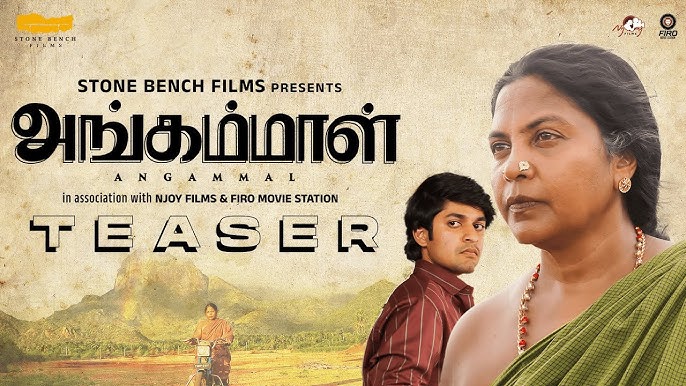
In the landscape of contemporary Indian independent cinema, few films manage to capture the friction between tradition and the relentless march of modernity as poignantly as Angammal. Directed by Vipin Radhakrishnan and adapted from the short story Kodithuni by the acclaimed Tamil writer Perumal Murugan, this 2024–2025 drama serves as a masterclass in minimalist storytelling. It is a film that finds the universal in the ultra-local, turning a simple dispute over a piece of clothing into a profound meditation on bodily autonomy and the dignity of the elderly.
Angammal: Movie Overview
| Feature | Details |
| Title | Angammal |
| Director | Vipin Radhakrishnan |
| Starring | Geetha Kailasam, Saran Shakthi, Bharani, Thendral Raghunathan |
| Genre | Drama |
| Release Date | October 19, 2024 (MAMI); December 5, 2025 (Theatrical) |
| Runtime | 117 Minutes |
| Language | Tamil |
| Based On | Kodithuni by Perumal Murugan |
Full Plot Synopsis
Set in a remote village in Tamil Nadu during the mid-1990s, the story centers on the titular character, Angammal (Geetha Kailasam), a fierce, independent widow who lives life on her own terms. She delivers milk on her rickety moped, shares acerbic banter with her friends, and maintains a distinct lifestyle that includes smoking beedis and—most significantly—refusing to wear a blouse under her sari. For Angammal, this isn’t a political statement; it is a matter of personal comfort and a tradition she has upheld for decades.
The status quo is disrupted when her younger son, Pavalam (Saran Shakthi), returns home. Pavalam is an aspiring doctor, newly educated in the city and desperate to climb the social ladder. He is in love with Jasmine (Mullaiyarasi), a woman from a wealthy, “sophisticated” family. As their marriage negotiations approach, Pavalam becomes increasingly obsessed with his mother’s appearance. He views her bare shoulders, her stained teeth, and her unrefined speech as badges of “indecency” that will embarrass him in front of his prospective in-laws.
What begins as a series of gentle suggestions quickly escalates into a battle of wills. Pavalam attempts to coerce his mother into wearing a blouse, viewing it as a necessary concession for his social advancement. Meanwhile, the elder son, Sudalai (Bharani), watches from the sidelines, carrying the quiet resentment of a man whose own dreams were sacrificed to fund Pavalam’s education.
The narrative reaches its peak when the “urban gaze” finally meets the rural reality. As Angammal is forced to try on the garment that she finds suffocating both physically and metaphorically, the film explores whether she will sacrifice her identity to satisfy her son’s insecurities or remain the “queen” of her own small, dusty domain.
Detailed Critique and Analysis
Themes: The Politics of the Blouse
At its core, Angammal is an exploration of bodily autonomy. By setting the film in the 90s—the dawn of globalization in India—Vipin Radhakrishnan highlights a period when traditional rural identities began to clash violently with Western-influenced “modern” standards of decency. The blouse becomes a symbol of Victorian morality imposed upon a culture where it was once unnecessary. The film skillfully connects this to the historical “Breast Tax” (Nangeli’s rebellion), though it keeps the focus intimate and personal rather than overtly historical.
Acting: A Career-Defining Turn
Geetha Kailasam delivers a performance that is nothing short of legendary. She portrays Angammal not as a saintly victim, but as a complex, often stubborn, and occasionally harsh matriarch. Her chemistry with her granddaughter, Manju (Yasmine), provides the film’s most tender moments, particularly the scene where she explains that a blouse would hide her cherished tattoo. Saran Shakthi effectively captures the “urban chauvinism” of Pavalam, making him a believable antagonist whose villainy stems from insecurity rather than malice.
Direction and Screenplay
Vipin Radhakrishnan’s direction is patient and observant. He avoids the pitfalls of melodrama, allowing the silence of the village landscape to speak for itself. The screenplay, co-written with Sudhakar Das, adds layers to Perumal Murugan’s original short story, fleshing out the secondary characters to create a lived-in world. The decision to use sync sound (sound recorded live on set) adds a level of realism that is rare in commercial Tamil cinema.
Visuals and Sound
The cinematography by Anjoy Samuel is breathtaking, capturing the sun-drenched fields and rugged terrain of Padmaneri with a poetic lens. The camera often lingers on Angammal’s face, finding beauty in the lines of age. This is complemented by Mohammed Maqbool Mansoor’s minimalist score, which never dictates the audience’s emotions but subtly underscores the mounting tension between mother and son.
Strengths and Weaknesses
Strengths
-
Authenticity: The film feels incredibly “lived-in,” from the dialect to the domestic rituals.
-
Social Commentary: It tackles heavy themes of class, caste, and gender without being “preachy.”
-
The Lead Performance: Geetha Kailasam’s portrayal is a masterclass in nuance.
-
Technical Excellence: Superior sound design and cinematography elevate the indie production.
Weaknesses
-
Pacing: The deliberate, “slow-burn” pace may be a challenge for viewers accustomed to fast-paced commercial dramas.
-
Niche Appeal: Its focus on a specific rural conflict might feel alien to audiences looking for high-stakes action.
Final Verdict
Angammal is a rare gem that honors the spirit of Tamil literature while pushing the boundaries of independent filmmaking. It is a poignant, often heartbreaking look at how we treat the elderly and how easily we trade our heritage for “decency.” It is not just a film about a blouse; it is a film about the right to be oneself.
Rating: 4.5/5
Review Schema
| Category | Score |
| Direction | 9/10 |
| Acting | 10/10 |
| Screenplay | 8.5/10 |
| Cinematography | 9/10 |
| Sound/Music | 8/10 |
| Overall Rating | 9/10 |